
Challenger Lifts
Heavy-duty American-made lifts built in Louisville, Kentucky since 1987. From 6,000 lb mid-rise lifts to 152,000 lb mobile column systems — every model ALI Certified.
Heavy-duty American-made lifts built in Louisville, Kentucky since 1987. From 6,000 lb mid-rise lifts to 152,000 lb mobile column systems — every model ALI Certified.
Challenger Lifts has been dedicated to the safe design, manufacturing, and distribution of technologically advanced automotive lifts since 1987. Operating from their headquarters and manufacturing facility in Louisville, Kentucky, Challenger handles all aspects of lift design, manufacturing, and distribution under one roof.
Their product range is one of the widest in the industry: two-post lifts from 9,000 to 20,000 lbs, four-post lifts from 14,000 to 60,000 lbs, plus inground lifts, scissor lifts, mobile column lifts, and home storage lifts. That kind of capacity range tells you where Challenger focuses its engineering — serious equipment for serious work.
Challenger’s patented Versymmetric® technology allows their lifts to operate in both symmetric and asymmetric configurations at full rated capacity — a genuine engineering advancement, not just marketing.
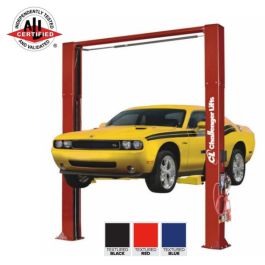
Heavy-duty American-made lifts for every application — from quick lube to heavy truck maintenance.

9,000 – 20,000 lb capacity. Versymmetric® technology, directSPOT arms, QuickCycle hydraulics. From the VLE10 value model to the CL20 heavy-duty workhorse.
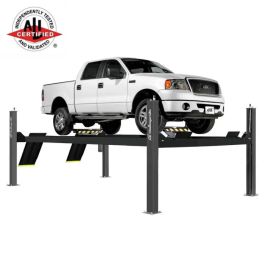
14,000 – 60,000 lb capacity. Open-front and closed-front configurations. Alignment-ready models with integrated turnplates and slip plates.
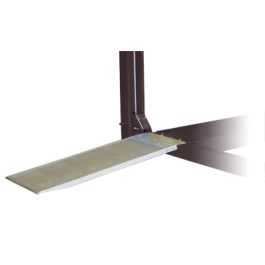
Mobile column lifts up to 152,000 lbs. Inground lifts, scissor lifts, mid-rise lifts, and Quality Lifts home storage solutions.
| Model | Type | Capacity | Key Feature | Best For |
|---|---|---|---|---|
| CL10AV3 | Versymmetric 2-Post | 10,000 lbs | Adjustable Width | Premium General Service |
| VLE10 | Versymmetric 2-Post | 10,000 lbs | Economy Model | Budget-Conscious Shops |
| CL12A | Heavy-Duty 2-Post | 12,000 lbs | Adjustable Width | Trucks & Fleet Service |
| 44040 | 4-Post | 40,000 lbs | Open Front | Heavy Truck Service |
| DERA200 | Scissor | 12,000 lbs | Flush-Mount | Dealership Service |
Challenger Lifts are designed, manufactured, and distributed from their headquarters in Louisville, Kentucky. Everything from engineering and fabrication to assembly and quality testing happens under one roof — 100% American-made.
Versymmetric is Challenger’s patented arm system that allows a single lift to operate in both symmetric and asymmetric configurations at full rated capacity. Symmetric mode is optimal for trucks and heavy vehicles. Asymmetric mode positions the vehicle rearward so front doors can open freely — ideal for daily service work. One lift handles every vehicle type optimally.
Yes. Every Challenger lift model carries ALI (Automotive Lift Institute) certification. They are independently tested and certified to meet ANSI/ALI ALCTV standards. Challenger actually over-engineers beyond minimum certification requirements, designing for real-world daily abuse conditions rather than just controlled test scenarios.
Challenger’s product range spans from 6,000 lb mid-rise lifts to 152,000 lb mobile column systems. Two-post lifts: 9,000-20,000 lbs. Four-post lifts: 14,000-60,000 lbs. This is one of the widest capacity ranges of any single lift manufacturer, making Challenger ideal for shops that want to standardize on one brand from the quick-lube bay to the heavy-truck pit.
Absolutely. We’ve worked with Challenger equipment extensively and can help you spec the right models for your shop’s needs. Call us at 866-217-0063 or email support@truckandcarlifts.com with details about your bays, ceiling heights, vehicle types, and capacity requirements.
“Challenger brings serious heavy-duty capability in an American-made package. When shops need lifts that can handle everything from passenger cars to Class 5 trucks, Challenger delivers.”
— TruckAndCarLifts.com Team
Challenger Lifts builds automotive lifts in Louisville, Kentucky, and they have built a reputation as one of the most capable lift manufacturers in the country. If you work on heavy trucks, fleet vehicles, or need a lift that can handle serious weight day after day, Challenger should be on your shortlist. Their product range runs from 6,000 lb mid-rise lifts all the way up to 152,000 lb mobile column systems — that kind of capacity range tells you something about where this company focuses its engineering.
Based in Louisville, Challenger designs, manufactures, and distributes every lift they sell. This is not a brand that slaps its name on imported equipment. The engineering happens in Kentucky, the welding happens in Kentucky, and the finished product ships from Kentucky. For shops that value American-made equipment, Challenger delivers that along with the heavy-duty capability that sets them apart from much of the competition.
Challenger’s two-post lift lineup spans from 9,000 to 20,000 lbs capacity. Their four-post lifts go from 14,000 to 60,000 lbs. Add in inground lifts, scissor lifts, mobile column lifts, short and mid-rise lifts, and home storage lifts, and you have one of the most complete lift catalogs in the industry. Every model is ALI Certified and backed by Challenger’s warranty and service infrastructure.
What really gets mechanics talking about Challenger, though, is their proprietary technology. The Versymmetric arm system allows a single lift to operate in both symmetric and asymmetric configurations without any modification. The QuickCycle system delivers 27-second rise times and 17-second descents. The directSPOT arm design eliminates the back-and-forth vehicle shuffling that wastes time with other lifts. These are not marketing gimmicks — they are engineering solutions to real problems that technicians deal with every day.
At TruckAndCarLifts.com, we carry Challenger Lifts and provide experienced guidance on selecting the right model for your shop. Contact us for pricing and expert recommendations.
Every Challenger lift carries ALI (Automotive Lift Institute) certification, meeting ANSI/ALI ALCTV standards. Many models also carry ETL certification. The ALI certification program is the gold standard in the automotive lift industry — it requires independent third-party testing to verify that a lift meets or exceeds the design, construction, and performance standards established by the American National Standards Institute. Not every lift manufacturer pursues ALI certification for every model, but Challenger does, which gives shop owners and fleet managers confidence that the equipment they are buying has been independently verified for safety and performance.
Beyond ALI and ETL certification, Challenger designs their lifts with safety margins that exceed the minimum certification requirements. The company’s engineering team designs for real-world conditions — the kind of daily abuse that a busy shop inflicts on its equipment — not just the controlled conditions of a certification test. This over-engineering philosophy means that a Challenger lift rated at 10,000 lbs has been designed and tested to handle loads well beyond its rated capacity, providing a safety margin that protects technicians and vehicles.
Challenger lifts range in capacity from 6,000 lbs to 152,000 lbs, making them one of the few manufacturers that can equip a shop from the quick-lube bay to the heavy-truck maintenance pit with a single brand. This breadth of product line is significant for multi-location operations and large fleet maintenance facilities that want to standardize on a single lift brand for simplified training, maintenance, and parts management.
Challenger maintains a network of factory-trained representatives across the country. They operate a Service School program that provides training on installation, maintenance, and troubleshooting for their equipment. Parts support is available directly from the Louisville facility, and the company maintains an inventory of replacement components for current and legacy models.
The company’s customer support can be reached at 800-648-5438 or via email, providing direct access to technical expertise for installation questions, troubleshooting, and parts ordering. For legacy models that may no longer appear in current product catalogs, Challenger offers a Legacy Manual Request Form on their website, ensuring that shops running older equipment can still access the documentation they need for proper maintenance and repair.
Challenger’s distribution network covers the entire United States and extends internationally. The company works through authorized distributors and equipment dealers who have been trained on Challenger products and can provide local installation and service support. This combination of factory-direct support and local dealer expertise gives shop owners multiple avenues for getting help when they need it.
Challenger’s two-post lift lineup features some of the most innovative engineering in the industry. Their models range from 9,000 to 20,000 lbs capacity, covering everything from passenger car service to Class 5 truck maintenance. The lineup is organized into several tiers: the CL Series (premium models with the latest technology), the VLE/SA Series (value models with core Challenger features), the LE/E Series (economy heavy-duty models), and the heavy-duty CL16/CL20 models for commercial vehicle service.
The CL10AV3 is Challenger’s flagship two-post model and showcases their best technology. The Versymmetric arm system and directSPOT design represent genuine innovations in how two-post lifts work. This is the lift that Challenger engineers point to when they want to demonstrate what sets their brand apart from every other lift manufacturer in the market.
The CL10AV3 is the lift we recommend most frequently to general-service shops and dealerships. It handles 95% of vehicles on the road today — from compact cars to full-size trucks and SUVs — and its Versymmetric flexibility means you will never wish you had bought a different configuration. The three width adjustments at installation let you optimize each bay, whether you are working in a tight urban shop or a spacious suburban facility.
The Versymmetric system is Challenger’s solution to the symmetric vs. asymmetric debate. Traditional lifts force you to choose one configuration at installation. Versymmetric offset front arms with directSPOT design allow the same lift to safely operate in both symmetric and asymmetric modes within the same service bay. Symmetric mode for trucks and SUVs where you need maximum width. Asymmetric mode for cars where you want easy door access. One lift, both configurations, no compromise.
Here is why this matters in a real shop environment: A typical dealership service center might see a compact sedan for an oil change at 8:00 AM, a 3/4-ton pickup for a brake job at 9:00 AM, and an SUV for suspension work at 10:00 AM. With a traditional lift, you would need to either accept the limitations of your fixed configuration (reduced door access on a symmetric lift, or reduced capacity utilization on an asymmetric lift) or install multiple lift types in your shop. With Versymmetric, every bay handles every vehicle optimally.
The engineering behind Versymmetric is not simply a matter of making arms that swing both ways. The arm geometry, column spacing, and load distribution calculations all had to be redesigned to ensure that the lift maintains full rated capacity and proper load balance in both symmetric and asymmetric configurations. Challenger patented this technology because it represents a genuine advancement in lift design, not just a marketing repositioning of existing technology.
The directSPOT design on the 3-stage front and rear arms eliminates the need to shuffle a vehicle back and forth to swing the front arm clear of the tire. With directSPOT, you position the vehicle once, swing the arms into place, and you are ready to lift. Accurate first-try spotting saves time on every vehicle and eliminates the frustration of repositioning.
To understand why directSPOT matters, consider what happens with a conventional two-post lift: You drive the vehicle onto the lift, get out, and start positioning the arms. But the front arms cannot swing past the front tires in their retracted position, so you have to get back in the vehicle, pull it forward a few inches, get out, swing the arm, get back in, back up to the proper position, get out, and verify the arm placement. This back-and-forth dance happens on every single vehicle and wastes 1-3 minutes each time. In a shop that lifts 30 vehicles per day, that is 30-90 minutes of daily productivity lost to arm positioning alone.
Challenger’s directSPOT geometry redesigns the arm swing path so that the arm clears the tire without vehicle repositioning. The 3-stage telescoping design provides the reach range needed for both compact cars and full-size trucks while maintaining the geometric clearance that makes directSPOT work. This is not an add-on or accessory — it is built into the fundamental arm design of every CL Series lift.
QuickCycle is available as a factory option or upgrade. It uses a 3 HP motor (vs. the standard 2 HP) to deliver 27-second rise times and 17-second descent times — roughly twice as fast as the standard configuration. In a high-volume shop where every lift cycles dozens of times per day, QuickCycle delivers measurable productivity gains.
The math on QuickCycle is compelling: If a standard lift takes 38 seconds to rise and you cycle the lift 40 times per day, that is 25.3 minutes spent waiting for the lift to rise. With QuickCycle at 27 seconds, that drops to 18 minutes — saving 7.3 minutes per day just on rise time. Add the faster descent time, and you are saving over 10 minutes per day per lift. Across a 10-bay shop running 250 working days per year, that is over 400 hours of recovered productive time annually. At a shop labor rate of $150/hour, QuickCycle pays for itself many times over in the first year.
The XP9 variant replaces the traditional swing arms with drive-on pads for the fastest possible vehicle spotting. At 9,000 lbs capacity, it is designed for express service bays where vehicles need to go up and come down as quickly as possible. The technician simply drives the vehicle onto the pads and hits the lift button — no arm positioning, no spotting, no adjustment. Available with QuickCycle for 27-second rise times, the XP9 is the ultimate express-service lift.
Drive-on pad lifts are ideal for dedicated oil change bays, tire rotation stations, and state inspection lanes where the vehicle mix is predictable and the service being performed does not require arm-based lifting point access. The pads support the vehicle by its tires, so the undercarriage is fully accessible for drain plugs, filters, and exhaust work.
The SA10 is Challenger’s value-tier 10,000 lb lift that still delivers Challenger quality at a more accessible price point. It features 3-stage front arms and 2-stage rear arms for symmetric and asymmetric lifting capability.
The SA10 is an excellent choice for shops that want Challenger build quality and the flexibility of symmetric/asymmetric operation without the premium price tag of the CL10AV3. It lacks the directSPOT arm geometry and the triple-width adjustment of the CL10AV3, but it delivers the same 10,000 lb lifting capacity with reliable Challenger construction. For budget-conscious shop owners opening a new facility or adding capacity to an existing shop, the SA10 delivers strong value.
The VLE10 brings Challenger’s industry-leading Versymmetric technology to the economy grade segment. This lift bridges the gap between the budget-friendly SA10 and the premium CL10AV3, offering Versymmetric arm flexibility at a mid-range price point.
The VLE10 includes the jacketed pulley-less single-point mechanical lock release system that was previously exclusive to the CL Series lifts. This feature alone significantly improves the operator experience — the mechanical lock release is smooth, reliable, and requires less effort than the release systems found on competing economy-grade lifts. Double telescoping screw pads with rubber footpads, padded overhead shut-off system, rubber door guards, premium powder coat finish, and plated arm restraints round out a feature set that punches well above its price class.
For shops that want Versymmetric flexibility but cannot justify the CL10AV3 price tag, the VLE10 is the sweet spot. You get the core Versymmetric technology that allows symmetric and asymmetric lifting in the same bay, wrapped in a durable, well-built package that will provide years of reliable service.
The CLFP9 is Challenger’s solution for low-ceiling installations. With an overall column height of just 10′ 7/8″ (120.875″), this lift fits in garages and service bays where overhead clearance prevents the installation of taller column lifts. The open-top design eliminates the overhead crossbeam entirely, accommodating vehicles of any height.
The baseplate design is a significant advantage for certain installation scenarios. Traditional overhead-beam two-post lifts require anchor bolts only in the floor, but they need the overhead beam to provide equalization and stability between the two columns. Baseplate lifts achieve column stability through the floor plate that connects the two columns at the base. This means the CLFP9 can be installed in spaces where an overhead beam would interfere with ceiling-mounted fixtures, ductwork, lighting, or sprinkler systems.
The fully gusseted baseplate reduces column deflection and provides more stable operation on floors that may not be perfectly level. This is particularly important in older buildings where the concrete floor may have settled unevenly over time. The 3-stage front and rear arms provide maximum sweep, arm retraction, and reach despite the lift’s compact vertical profile.
The open-top design means there is no overhead beam to limit the height of vehicles you can drive through the lift bay. This makes the CLFP9 compatible with lifted trucks, vehicles with roof-mounted equipment, and commercial vehicles with tall cargo configurations. If your shop sees a variety of vehicle heights and you have ceiling height limitations, the CLFP9 solves both problems simultaneously.
The CL12A steps up to 12,000 lbs for shops that regularly service heavy trucks, vans, SUVs, and EVs. The adjustable width and available height extensions make it adaptable to a wide range of shop configurations. This is Challenger’s newest premium heavy-duty two-post design, and it incorporates everything the company has learned about what professional technicians need in a high-capacity lift.
The included Stack Adapter Kit (P/N 10315) expands lifting point compatibility across a wider range of vehicles. Premium telescoping footpads provide easy and precise vehicle positioning without the need for separate adapters in most cases. The CL12A also accepts the QuickCycle upgrade for shops that need faster cycle times at 12,000 lb capacity.
The CL12A-LC low ceiling variant deserves special attention. At just 143″ (11′ 11″) overall height, it fits in a standard 12-foot ceiling while still delivering the full 12,000 lb capacity. The rise height is slightly reduced to 74 3/4″ compared to the standard model’s 78 3/4″, but this is still more than adequate for underbody access on most vehicles. For shops in older buildings with 12-foot ceilings that need heavy-duty lifting capability, the CL12A-LC fills a gap that very few competitors can match.
The LE12-3S is Challenger’s economy-grade 12,000 lb lift, offering heavy-duty capacity at a price point that makes it accessible for smaller shops and independent garages. Despite its “economy” classification, this lift includes features that would be considered premium on competing brands.
The LE12-3S includes features like the jacketed pulley-less single-point mechanical lock release, padded overhead shut-off, powder coat finish, plated arm restraints, and heavy-duty polyurethane screw pads with included 3″ and 6″ stack adapters. The 3-stage front and rear arms provide greater reach and flexibility compared to the previous 2-stage LE12 design, accommodating everything from compact SUVs to heavy-duty trucks up to 12,000 lbs. Adjustable column height, integrated rubber door guards, and organizer racks complete a package that delivers outstanding value for budget-conscious shop owners who refuse to compromise on lifting capacity.
The E15 fills the gap between the 12,000 lb models and the CL16, providing an economic option for shops that need to service vehicles up to 15,000 lbs. This lift is purpose-built for fleet operations and commercial vehicle service where 12,000 lbs is not quite enough but 16,000 lbs capacity is more than the budget allows.
The E15 includes a built-in 2-foot column height extension, which means the lift ships with everything needed for either standard or extended height installation. This eliminates the need to order a separate extension kit and simplifies the installation process. The adjustable column height accommodates higher-profile vehicles and provides maximum headroom for working underneath vehicles. The jacketed pulley-less single-point mechanical lock release — once exclusive to the CL Series — is now standard equipment on the E15.
The CL16 brings 16,000 lbs of capacity to the two-post format with Challenger’s adjustable width system and 3-stage front and rear arms. This lift handles vehicle Classes 1-4 and is designed for fleet maintenance operations, commercial vehicle service centers, and heavy-duty repair shops.
The CL16 represents a significant step up from the 12,000 lb models in several ways beyond just capacity. The 3 HP motor (vs. 2 HP on the lighter models) provides the power needed to consistently lift heavy commercial vehicles. The air-actuated single-point lock release system replaces the manual release found on lighter models, making it easier and safer to lower heavy vehicles. The 3-stage front and rear arms offer an impressive arm reach range of 36.625″ to 75″, accommodating the wide variety of lifting point locations found on commercial vehicles.
Three adjustable width settings and three corresponding column spacing options mean the CL16 can be configured for different bay widths at installation. Three overall height options (plus extended height versions) provide flexibility for different ceiling heights. This degree of configurability makes the CL16 suitable for installation in virtually any commercial service facility.
The CL20 is Challenger’s top-capacity two-post model at 20,000 lbs. It handles vehicle Classes 1-5 on a single platform, making it the lift for fleet operations that service everything from sedans to medium-duty trucks. The CL20 shares its platform architecture with the CL16 but is engineered for higher capacity with heavier components throughout.
The CL20 features include a single-point air-actuated lock release, oversized 5″ diameter steel pulleys, heavy-duty 3/8″ equalization cable, a 60″ lifting carriage design for maximum load distribution, and dual integrated rubber door guards. The adjustable width and symmetric design provide full access to the vehicle interior from both sides, making it suitable for heavy-duty work that requires access to both sides of the vehicle simultaneously.
The CL20 comes standard with B12162S-12 screw pads, 4″ and 8″ stack adapters, and organizer racks with hardware. Optional accessories include the 10317 reducer bushing kit, the 10333 Sprinter adapter kit (with 2 pin adapters and 2 cradle adapters), and the B10264A air/electric workstation with filter/lubricator/regulator. The B99700 Tire Tool Manager Work Station is also available for shops that want integrated tool management at the lift station.
Challenger’s four-post lineup demonstrates why this brand is respected in the heavy-duty space. While most manufacturers top out at 14,000-18,000 lbs in their four-post range, Challenger goes all the way to 60,000 lbs with their 440 Series. The four-post design provides inherent stability that makes these lifts ideal for heavy vehicles, alignment work, and applications where the vehicle needs to remain on the lift for extended periods.
Four-post lifts offer several advantages over two-post designs for specific applications. The vehicle drives onto runways rather than being suspended from lifting points, which means no adapter selection, no arm positioning, and no concern about finding the correct lifting points. This makes four-post lifts faster for drive-on/drive-off operations and safer for vehicles with unusual or difficult-to-access lifting points. The runway design also makes four-post lifts ideal for vehicle storage, alignment work, and long-term service operations where the vehicle may remain on the lift for hours or even days.
The 4P14 is Challenger’s entry point into the four-post category, and at 14,000 lbs it handles everything from passenger cars to full-size trucks and SUVs. The 78″ rise height provides excellent working clearance underneath the vehicle, and the 20″ wide runways accommodate virtually all passenger vehicle and light truck tire widths. The adjustable width between runways (40″ or 43″) allows the lift to be configured for different vehicle track widths.
The closed-front design provides additional structural rigidity and makes the 4P14 suitable for installations where vehicles will be driven onto the lift from one direction only. For shops that need an open-front configuration for drive-through capability, Challenger offers alternative four-post models with open-front designs.
The 4115 is Challenger’s alignment-ready four-post platform. It combines general service capability with built-in alignment functionality, allowing shops to perform wheel alignments without dedicating a separate lift bay exclusively to alignment work. This dual-purpose capability is particularly valuable for shops with limited bay count that need to maximize the utility of every lift position.
The 4115 accepts standard alignment system components and can be equipped with front and rear slip plates, turn plates, and alignment heads from major alignment system manufacturers. This makes it compatible with alignment equipment from Hunter, John Bean, Hofmann, and other leading alignment system brands. When alignment work is not being performed, the 4115 functions as a standard general-service four-post lift.
The 4018 is built for shops servicing light and medium-duty commercial vehicles. With 24″ wide runways and capacity for vehicles up to 220″ wheelbase, it handles everything from full-size trucks to medium-duty fleet vehicles. This is the four-post lift that fleet maintenance operations, municipal garages, and commercial vehicle service centers turn to for reliable daily service.
The 4018’s 24″ wide runways are a significant upgrade from the 4P14’s 20″ runways, accommodating the wider tire profiles found on commercial vehicles, dual-rear-wheel trucks, and heavy-duty pickup trucks. The 220″ maximum wheelbase capacity covers most Class 3-5 vehicles, including popular commercial platforms like the Ford F-450/F-550, Ram 4500/5500, and various medium-duty cab-and-chassis configurations.
The 44018 offers the same 18,000 lb capacity as the 4018 with a chain-driven lifting mechanism instead of the cable-driven system. Chain-drive systems use heavy-duty, high-tensile-strength leaf chain with sealed roller bearings for smooth, reliable lift operation. Some shops prefer chain drive for its lower maintenance requirements and longer service intervals between adjustments. The choice between cable-driven (4018) and chain-driven (44018) is largely a matter of shop preference and maintenance philosophy — both systems deliver reliable, safe performance.
The 4030 Series steps into serious heavy-duty territory at 30,000 lbs. Available in both general service and alignment configurations, this lift handles Class 5-7 vehicles including medium-duty trucks, larger delivery vehicles, school buses, and commercial fleet equipment. The 4030 is available in six configurations to match different facility requirements:
The alignment models (SAX, EAX, XAX) add alignment capability with maximum two-wheel alignment wheelbases of 219.5″, 256″, and 292″ respectively. The 4030 uses Challenger’s time-proven cable-driven lift system with heavy-duty steel sheaves and cables for optimal performance and long-term reliability. The 6-position air lock system with single-point lock release provides multiple height settings for different working positions.
The chain-driven counterpart to the 4030 Series, the 44030 offers the same 30,000 lb capacity with heavy-duty leaf chain drive instead of cable drive. Available in standard (44030), extended (44030E), and XL extended (44030X) lengths. The 44030 shares the same 24″ wide runways, 6-position air locks with single-point lock release, and ALI certification as the cable-driven 4030 Series.
The 440 Series represents the extreme end of Challenger’s four-post range. With capacities from 40,000 to 60,000 lbs, these lifts service heavy-duty commercial vehicles, transit buses, school buses, refuse trucks, and large fleet equipment. This is the kind of equipment you find in transit authorities, school bus fleets, municipal maintenance operations, and military vehicle maintenance facilities.
The 440 Series lifts are engineered for the most demanding commercial and government applications, where the equipment must handle the heaviest vehicles in the fleet while meeting strict safety and compliance requirements. Every 440 Series lift carries ALI certification and is designed for continuous heavy-duty service in high-volume maintenance environments.
Challenger produces a range of inground lifts for shops that want a clean, flush-floor installation. Inground lifts provide several unique advantages: the columns retract below floor level when not in use, creating an unobstructed work area. There is no overhead beam or column structure above floor level, which means maximum vehicle height clearance and the cleanest possible shop appearance. Inground lifts are particularly popular in dealership showroom-adjacent service areas and high-end specialty shops where aesthetics matter.
Inground lifts require more complex installation than surface-mounted lifts — the installation involves cutting into the shop floor, installing the lift cylinder and plunger assembly below grade, and then rebuilding the floor around the lift. This makes inground lifts a more significant capital investment in both equipment and installation labor, but the result is a service bay with a completely clean floor surface and no above-ground obstructions. For new construction, inground lifts can be incorporated into the floor design before the concrete is poured, significantly reducing installation complexity and cost.
Challenger’s mobile column lifts are designed for heavy-duty applications where fixed lifts are not practical. These lifts are portable — individual columns can be rolled into position around a vehicle, connected wirelessly or via cables, and used to lift vehicles that would be impossible to service on a fixed lift. The range includes:
Mobile column systems can be combined (4, 6, or 8 columns) to reach total system capacities up to 152,000 lbs — enough to lift a fully loaded transit bus or heavy commercial vehicle. The mobile design means these lifts can be deployed anywhere there is a solid, level surface — inside a maintenance facility, on a depot yard, or even at a remote service location. This flexibility makes mobile column lifts essential for transit authorities, school bus fleets, military installations, and any operation that maintains heavy vehicles.
Mobile column lifts can be operated on almost any solid surface, indoors or outdoors. The columns are maneuverable despite their heavy-duty construction, allowing a small crew to position them around a vehicle in minutes. Once positioned, the columns synchronize their lifting operation to ensure even, stable lifting of the vehicle. Safety features include automatic synchronization monitoring, overload protection, and mechanical safety locks at multiple height positions.
Scissor lifts offer a unique combination of features: they provide a flat platform surface for the vehicle (like a four-post lift) but retract to a very low profile when lowered (unlike a four-post lift with its permanent runway height). This makes scissor lifts excellent for installations where low drive-on height is important and where the lift needs to blend into the floor when not in use. The SX14 is particularly popular for alignment bays because the flat platform provides the stable, level surface that precise alignment measurements require.
Challenger also offers home storage lifts for residential garages through their Quality Lifts brand, providing double-stacking capability for car collectors and enthusiasts with limited garage space. These lifts allow homeowners to park one vehicle on the lift platform and another vehicle underneath, effectively doubling the parking capacity of a single garage bay. Home storage lifts are designed with residential-friendly features including lower noise levels, simpler electrical requirements, and clean aesthetics that complement a home garage environment.
Versymmetric is Challenger’s patented arm design that allows a single two-post lift to operate in both symmetric and asymmetric configurations. Traditional lifts require a permanent choice at installation. Versymmetric offset front arms are designed so that the same lift safely accommodates both configurations in the same bay, simply by how the arms are positioned under the vehicle.
This flexibility has real practical value. A shop that services both passenger cars (where asymmetric is preferred for door clearance) and heavy trucks (where symmetric provides better weight distribution) does not need two different lifts. One Versymmetric-equipped Challenger handles both.
The Versymmetric system is available across multiple Challenger model lines, from the economy VLE10 to the premium CL10AV3. This means shops at every budget level can access this flexibility. The system works through careful engineering of the arm geometry — the offset front arms can reach both the symmetric lifting points (centered between the columns) and the asymmetric lifting points (shifted toward the rear of the vehicle for front-heavy passenger cars) without compromising load distribution or safety at either position.
The directSPOT arm geometry eliminates the most common frustration with two-post lifts: having to move the vehicle back and forth to clear the arms past the tires. With directSPOT, the arm geometry allows direct swing into position without tire interference. The vehicle gets positioned once, spotted once, lifted once. In a high-volume shop, this saves minutes per vehicle that compound into hours per week.
directSPOT is currently available on the CL10AV3 and other CL Series models. The technology works by redesigning the arm pivot point and swing geometry so that the arm’s swing arc naturally clears the tire profile at all positions along its travel range. This sounds simple in concept, but the engineering challenge is significant — the arm must clear tires ranging from a compact car’s 195/65R15 to a full-size truck’s 275/65R20, all while maintaining proper reach range and load capacity. Challenger’s engineering team solved this with the 3-stage arm design that provides the necessary geometric clearance at every extension length.
QuickCycle uses a 3 HP motor to deliver dramatically faster cycle times: 27 seconds to full rise and 17 seconds to lower. Compare that to the standard 38-second rise on the CL10AV3, the 43-second rise on the SA10, the 44-second rise on the VLE10, or the 63-second rise on the CL12A. For express lube bays, tire shops, and high-volume service centers, QuickCycle is a productivity multiplier.
QuickCycle is available as a factory option on multiple Challenger models, including the CL10AV3, CL10A-XP9, CL12A, and inground models like the EV1020-QC. The upgrade involves installing a higher-capacity 3 HP power unit and associated hydraulic components. For shops that did not specify QuickCycle at original purchase, the upgrade can typically be performed in the field by a qualified service technician.
Challenger’s 3-stage arms represent an evolution in two-post lift arm design. Traditional lift arms use a 2-stage telescoping design — the arm extends in two sections. Challenger’s 3-stage design adds a third telescoping section, which provides several benefits:
Challenger offers 3-stage arms in various configurations: 3-stage front with 3-stage rear (CL10AV3, CL12A, CLFP9, LE12-3S, CL16), 3-stage front with 2-stage rear (SA10, VLE10), and 2-stage front with 2-stage rear (E15, CL20). The choice of arm configuration affects reach range, sweep geometry, and pricing. For most general-service applications, the 3-stage front with 2-stage rear configuration provides an excellent balance of capability and value.
Challenger’s CL10A and CL12A models feature multiple width adjustment options that can be set at installation time. The CL10AV3 offers three width settings: 11′ 6.5″, 12′ 0.5″, and 12′ 6.5″ overall. The CL12A offers settings at 148″ and 154″ overall. The CL16 and CL20 offer three width settings each: 154.75″, 160.75″, and 166.75″ overall. Height extensions of 1′, 2′, or 3′ are available (depending on model) to accommodate taller service bays.
This adjustability means one lift model can be configured for different bay sizes across a shop, simplifying ordering and parts inventory while optimizing each bay for its specific dimensions. A multi-bay shop can order the same model number for every bay and then adjust width and height at installation to match each bay’s specific dimensions.
Challenger’s premium double telescoping screw pads adjust to multiple heights, minimizing the need for separate adapter sets. The screw pad adjusts smoothly and locks securely at the desired height, allowing technicians to match the lifting point height precisely without stacking adapters. This saves time on every vehicle and reduces the risk of adapter stacks shifting or falling during lifting.
Heavy-duty polyurethane screw pads are standard on most Challenger models, providing a non-marring contact surface that protects vehicle underbody components from damage during lifting. The polyurethane material is durable enough for continuous professional use while being soft enough to prevent scratching or denting of vehicle lifting points.
Challenger lifts are manufactured in Louisville, Kentucky. Along with Rotary Lift, Challenger is one of the few major lift brands that can genuinely claim American manufacturing. For shops that need Buy American compliance, government contracts, or simply want to support domestic manufacturing, Challenger delivers. The Louisville facility handles every step of the manufacturing process — from raw steel to finished, painted, tested lifts ready for shipment. There is no assembly of imported components or rebadging of foreign-manufactured equipment.
Challenger’s lineup reaches capacities that most competitors do not touch. Two-post lifts to 20,000 lbs. Four-post lifts to 60,000 lbs. Mobile column systems to 152,000 lbs. If your shop services anything heavier than passenger vehicles, Challenger likely has the right lift at the right capacity. This heavy-duty DNA extends even to their standard-capacity models — a Challenger 10,000 lb lift is built with the same engineering philosophy as their heavy-duty equipment. The columns are thicker, the carriages are longer, and the safety margins are wider than what you will find on most competing 10,000 lb lifts.
No other manufacturer offers the symmetric/asymmetric flexibility that Versymmetric provides. If your shop services a diverse vehicle mix, this feature alone can justify choosing Challenger over competitors that lock you into one configuration. The ability to switch between symmetric and asymmetric operation in the same bay, on the same lift, without any hardware changes or modifications, is unique to Challenger.
27-second rise times are among the fastest in the industry for a standard two-post lift. In express service bays, the time savings compound rapidly — if you service 50 vehicles per day and save 30 seconds per lift cycle, that is 25 minutes per day or over 100 hours per year of recovered productive time. When you factor in the faster descent time as well, the total time savings can exceed 150 hours per year per lift.
Challenger positions itself as a premium-quality, American-made brand at a price point below Rotary Lift. You get domestic manufacturing, innovative technology, and ALI certification without paying the absolute top-tier premium. Compared to Atlas, Challenger costs more but offers American manufacturing and proprietary technology that Atlas does not provide. The value proposition is clear: Challenger delivers more technology and better build quality than economy imports, while costing less than the absolute top-tier domestic brands.
Challenger backs their lifts with strong warranty coverage that demonstrates confidence in their products:
The warranty is guaranteed to the original owner and covers repair or replacement of defective parts, including reasonable costs of transportation and labor for replacement during the warranty period. The warranty requires that the lift be installed, used, and maintained according to Challenger’s specifications, and that warranty registration be completed within 30 days of installation. Warranty coverage is governed by the Commonwealth of Kentucky.
Challenger’s warranty terms compare favorably to the industry. The 5-year structural warranty matches or exceeds what most competitors offer, and the 2-year functional parts warranty is longer than the 1-year coverage that is standard across much of the industry. The availability of extended warranty coverage to bring functional parts up to 5 years is an added benefit that many competing brands do not offer.
The CL10AV3 combines Versymmetric technology, directSPOT arms, QuickCycle option, three width adjustments, two height adjustments, and ALI/ETL certification in a single package. No other 10,000 lb lift on the market offers this combination of flexibility and performance. If we could only sell one lift model to every shop in the country, this would be it.
Key Specs: 10,000 lbs, 74 1/8″ rise, 27-second QuickCycle rise, 3-stage arms front and rear, 3 width / 2 height adjustments, ALI/ETL Certified
Best for: Multi-service shops, dealerships servicing diverse vehicle lines, any operation that needs symmetric and asymmetric capability on one lift. The CL10AV3 is particularly strong in dealership environments where the vehicle mix ranges from compact sedans to full-size SUVs and trucks, and where the shop needs every bay to be able to handle any vehicle that rolls through the door.
The CL12A delivers 12,000 lbs of capacity with width adjustment, height extension options, and 3-stage arms in a package that adapts to virtually any shop configuration. The low-ceiling variant (CL12A-LC) fits in 12-foot ceilings while still delivering 12,000 lbs of capacity — a rare combination in the industry.
Key Specs: 12,000 lbs, 78 3/4″ rise, adjustable width (148″-154″), height extensions to 15′ 8″, 3-stage front and rear arms, ALI Certified
Best for: Truck shops, fleet maintenance, any shop that regularly lifts vehicles over 10,000 lbs and needs adaptable bay configurations. The CL12A-LC is specifically recommended for shops in older buildings with standard 12-foot ceilings that need heavy-duty capacity.
Drive-on pads eliminate arm positioning entirely. Drive on, lift, service, lower, drive off. With QuickCycle, the entire lift cycle takes under 30 seconds. This is the fastest way to get a vehicle in the air in a professional service environment.
Key Specs: 9,000 lbs, 70″ rise, drive-on pads, 27-second QuickCycle rise, ALI/ETL Certified
Best for: Express lube centers, tire shops, quick-service operations, any high-throughput bay. The XP9 excels in dedicated service lanes where the same type of service is performed on every vehicle and speed is the primary competitive advantage.
The VLE10 brings Versymmetric technology to a price point that independent shops and smaller operations can justify. You get the core symmetric/asymmetric flexibility along with the jacketed single-point lock release and quality construction that define the Challenger brand.
Key Specs: 10,000 lbs, 74.75″ rise, 44-second rise, Versymmetric 3-stage front / 2-stage rear arms, ALI/ETL Certified
Best for: Independent shops, startup operations, and any facility where Versymmetric flexibility is important but the premium CL10AV3 price tag exceeds the budget.
The 4P14 brings Challenger’s build quality to the four-post format with 14,000 lbs of capacity and a 78″ rise. The closed-front design with 20″ runways handles everything from passenger cars to full-size trucks.
Key Specs: 14,000 lbs, 78″ rise, 20″ runways, 40″-43″ between runways, air-operated lock, ALI Certified
Best for: General service shops, dealerships, vehicle storage, alignment bays (with conversion). The 4P14 is the right choice when you need a lift for drive-on convenience, vehicle storage, or applications where the vehicle will stay on the lift for extended periods.
At 18,000 lbs with 24″ wide runways and 220″ wheelbase capacity, the 4018 handles medium-duty commercial vehicles that would overwhelm most four-post lifts. Available in general service or alignment configuration.
Key Specs: 18,000 lbs, 24″ runways, 220″ max wheelbase, ALI Certified
Best for: Fleet maintenance, commercial vehicle service, medium-duty truck shops, government vehicle maintenance. The 4018 is the workhorse of Challenger’s four-post line and the lift we recommend most frequently for fleet maintenance operations.
For shops that need to lift heavy commercial vehicles on a two-post platform, the CL16 (16,000 lbs) and CL20 (20,000 lbs) deliver the capacity with Challenger’s adjustable-width architecture, 3 HP motors, and air-actuated lock release systems.
CL16 Key Specs: 16,000 lbs, 75.5″-81.5″ rise, 3-stage arms, 3 width/height adjustments, 62-second rise, ALI Certified
CL20 Key Specs: 20,000 lbs, 76.6″-84.6″ rise, 2-stage arms, 3 width/height adjustments, 62-second rise, ALI Certified
Best for: Fleet maintenance operations, commercial vehicle service centers, government facilities, military installations, and any shop that regularly services Class 4-5 vehicles.
Challenger makes the capacity decision straightforward with their range. Here is a practical guide based on the vehicles you service:
A general rule of thumb: choose a lift with at least 25% more capacity than the heaviest vehicle you expect to service regularly. This provides a safety margin, accounts for toolbox and equipment weight that may be left on the vehicle, and ensures the lift operates well within its design parameters for maximum service life.
Challenger’s adjustable width feature is particularly valuable when outfitting a multi-bay shop. You can order the same CL10AV3 model for every bay and adjust the width to match each bay’s dimensions. This simplifies ordering, maintenance, and parts inventory. Here are the bay requirements for popular models:
Ceiling height is often the most critical constraint in lift selection. Here is a quick reference for minimum ceiling heights across the Challenger lineup:
If your ceiling height is borderline, always measure carefully and account for any ceiling-mounted obstructions (lights, ductwork, sprinkler heads, ceiling fans) that may reduce effective clearance. Column shimming during installation can add additional height requirements, so it is best to have at least 1-2 inches of clearance beyond the published minimum.
All Challenger two-post lifts require a concrete floor that meets these minimum specifications:
If your shop floor does not meet these specifications, concrete remediation may be required before lift installation. For new construction, ensure your concrete contractor is aware of the lift installation locations and specifications before pouring. The cost of properly specifying the concrete during construction is far less than the cost of floor remediation after the fact.
Challenger lifts have straightforward electrical requirements:
Ensure adequate electrical service is available at each bay location. If you are installing multiple lifts, calculate the total electrical load and verify that your shop’s main service panel can handle the combined demand. For shops installing QuickCycle models or heavy-duty lifts, the 3 HP motor draws more current during startup (inrush current) than during normal operation, so the circuit should be sized accordingly.
Models that require compressed air (CL16, CL20, four-post lifts) need a reliable shop air supply at 90-120 PSI. This air supply powers the air-actuated lock release system. If your shop does not have a central compressed air system, you will need to install one or provide a dedicated air supply at each lift bay.
If your shop processes more than 20 vehicles per day on a single lift, QuickCycle pays for itself in saved labor time. For lower-volume shops, the standard cycle time is perfectly adequate. QuickCycle can be specified at order or added as an upgrade later, so there is no risk in starting with the standard configuration and upgrading when volume justifies the investment.
The choice between two-post and four-post lifts depends on your specific application:
Both brands manufacture in the USA and carry ALI certification. Rotary is part of the Dover Corporation family and has a longer history in the market. Challenger typically offers a lower price point than Rotary while providing comparable or superior technology features like Versymmetric and QuickCycle. Rotary counters with their own proprietary technologies. For shops comparing these two brands, the decision often comes down to pricing, local dealer support, and specific feature preferences.
Atlas offers lower price points but imports their equipment. Challenger costs more but provides American manufacturing, proprietary technology (Versymmetric, directSPOT, QuickCycle), ALI/ETL certification across the full product line, and a stronger warranty. For shops that prioritize value above all else, Atlas may be attractive. For shops that prioritize quality, innovation, and domestic manufacturing, Challenger is the clear choice.
BendPak manufactures in California and offers a wide product range with strong brand recognition. Challenger differentiates with Versymmetric technology, heavier-duty construction on comparable capacity models, and deeper capability in the heavy-duty commercial vehicle segment. Both brands are solid choices for professional shops.
At TruckAndCarLifts.com, we are an experienced Challenger Lifts reseller. We carry the full Challenger product line and provide the expert guidance you need to select the right model, configure it for your bay, and get it installed correctly. Our team has helped hundreds of shops — from single-bay independents to multi-location fleet operations — select and install the right Challenger equipment for their specific needs.
Challenger Lifts represent the best combination of American manufacturing, innovative technology, and heavy-duty capability in the automotive lift market. Whether you need a single two-post for a small shop or a complete fleet maintenance facility with mobile column lifts, we can put together the right Challenger package for your operation.
We provide pre-sale consultation to help you match the right Challenger model to your shop’s specific requirements. We will walk through your vehicle mix, bay dimensions, ceiling height, floor specifications, and electrical capacity to ensure you get the right lift the first time. We can also coordinate installation with qualified installers in your area and provide ongoing support after the sale.
Ready to upgrade your shop? Browse our online store for Challenger inventory, or contact us directly for a custom quote. We offer competitive pricing on the full Challenger lineup and can provide multi-unit quotes for shops outfitting multiple bays.
Also explore our other top brands: Atlas Automotive Equipment | Rotary Lift | Forward Lift | MAHLE Service Solutions | COATS | Norco Professional Lifting
American-made heavy-duty lifts — expert guidance and competitive pricing.
📞 866-217-0063
✉️ support@truckandcarlifts.com